Property Title Verification in South India: A Step-by-Step Guide
Title verification is the process of confirming that a seller legally owns a property and has the clear, unencumbered right to transfer it. In South India, where property disputes and ancestral-land claims are common, skipping this step is one of the most expensive mistakes a buyer can make.
In our view, title verification deserves more attention than buyers typically give it. Many purchasers obsess over price per square foot and amenities, yet treat legal due diligence as a box-ticking formality handled entirely by the bank. That is a risky assumption — a lender's valuation serves its own interests, not necessarily yours.
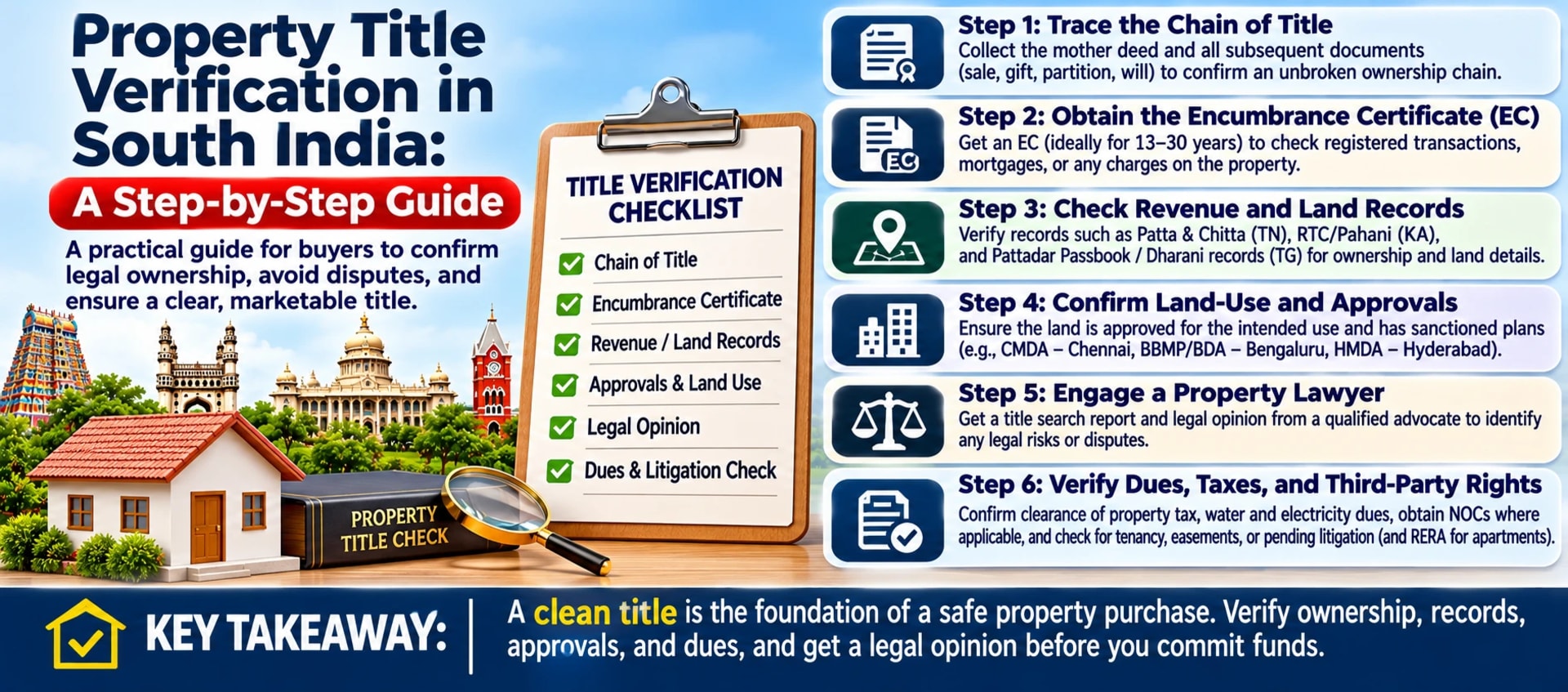
Step 1: Trace the chain of title
Start by establishing an unbroken chain of ownership, ideally covering the past several decades. This means collecting the mother deed (the earliest available title document) and every subsequent sale deed, gift deed, partition deed, or will that transferred the property. Each link should show how ownership passed legitimately from one party to the next.
Step 2: Obtain the Encumbrance Certificate
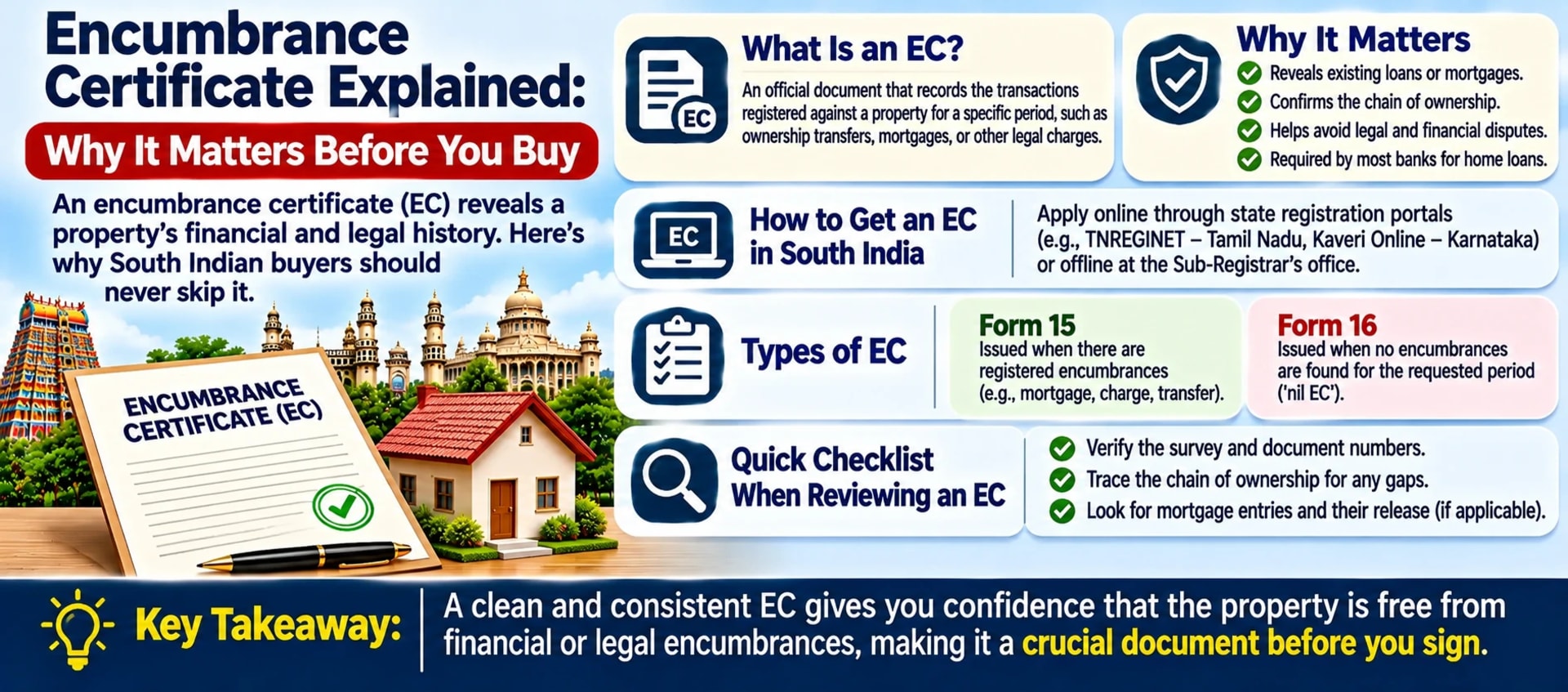
An Encumbrance Certificate (EC) lists registered transactions, mortgages, and charges against a property over a chosen period. In Tamil Nadu, Karnataka, Telangana, Andhra Pradesh, and Kerala, ECs can generally be applied for through the respective state registration department portals, and a review of at least 13 to 30 years of history is commonly recommended.
Step 3: Check revenue and land records
Verify the property's revenue records against the title documents. Depending on the state, these include Patta and Chitta in Tamil Nadu, RTC (Pahani) and mutation records in Karnataka, and Pattadar Passbooks under systems such as Telangana's Dharani portal. These records should name the same owner as the sale deed and confirm the land's classification and extent.
Step 4: Confirm land-use and approvals
Ensure the land is legally approved for its intended use and that any construction has sanctioned plans. Check for approvals from the relevant planning authority — such as CMDA in Chennai, BBMP and BDA in Bengaluru, or HMDA in Hyderabad — and confirm the plot is not on classified agricultural, poramboke, or litigation-flagged land.
Step 5: Engage a property lawyer
A qualified advocate can issue a title search report and a legal opinion after scrutinising the documents. Many banks require this opinion before sanctioning a home loan, but commissioning your own independent review gives you an unbiased assessment of risks the lender may not flag.
Step 6: Verify dues, taxes, and third-party rights
Confirm that property tax, water, and electricity dues are cleared, and request No Objection Certificates where applicable. For apartments, check the builder-buyer agreement, RERA registration, and the status of the completion or occupancy certificate. Also rule out tenancy rights, easements, and pending litigation.
Consider a hypothetical buyer evaluating a plot on the outskirts of a growing IT corridor. The paperwork looks clean at first glance, but a 30-year EC reveals an old mortgage that was never formally discharged, and the revenue records still list a deceased relative as co-owner. In this scenario, insisting on a release deed and a clear mutation before paying any advance saves the buyer from inheriting a tangled dispute.
We consistently advise readers to budget both time and money for due diligence rather than rushing to secure a property in a hot market. A thorough title check is modest insurance against a purchase that could tie up your capital in court for years. The emotional pressure of a 'limited period offer' is precisely when careful verification matters most.
As states continue digitising land records through platforms like Dharani and other online registration portals, title verification is likely to become faster and more transparent over the coming years. However, buyers should expect legacy records and unrecorded family arrangements to remain a source of risk for some time, meaning professional legal review is unlikely to become redundant soon.
Key takeaway
A clean title underpins the entire value of a property transaction. Trace the chain of ownership, pull a long-horizon Encumbrance Certificate, reconcile revenue records, confirm approvals, clear dues, and secure an independent legal opinion before you commit funds.