Tamil Nadu charges 7% stamp duty plus 4% registration fee on a sale deed for male buyers, calculated on whichever is higher — guideline value or sale price. Women buyers get a 2% rebate, paying 5% stamp duty instead of 7%. On an ₹80 lakh flat, a male buyer pays ₹5.6 lakh stamp duty plus ₹3.2 lakh registration, totaling ₹8.8 lakh.
Quick answer: Calculating Tamil Nadu stamp duty comes down to one formula — guideline value or sale price, whichever is higher, multiplied by the applicable rate — and the rate itself depends on the transaction type and buyer. Standard sale deeds cost 7% stamp duty + 4% registration for male buyers, dropping to 5% stamp duty for women buyers registering solely in their name. Gift deeds to blood relatives are far cheaper at 1% + 1%, while gift deeds to others and residential lease agreements follow different rates again. On an ₹80 lakh flat, a male buyer's total works out to ₹8.8 lakh in stamp duty and registration combined. Always verify the guideline value on TNREGINET before finalising a sale price — paying below guideline value doesn't reduce your stamp duty, since duty is calculated on the higher of the two figures regardless.
What is Stamp Duty?
Stamp duty is a state-levied tax paid when registering a property. In Tamil Nadu, it is charged on the guideline value or the actual sale price, whichever is higher.
Tamil Nadu Stamp Duty Rates 2026
| Transaction Type | Stamp Duty | Registration Fee |
|---|---|---|
| Sale deed (male buyer) | 7% | 4% |
| Sale deed (female buyer) | 5% | 4% |
| Gift deed (blood relative) | 1% | 1% |
| Gift deed (others) | 7% | 4% |
| Lease agreement (residential) | 1% | 1% |
How to Calculate Stamp Duty in Tamil Nadu
Formula: Stamp Duty = Guideline Value (or Sale Price, whichever is higher) × Rate
Example: Buying a flat worth ₹80 lakh in Chennai (male buyer):
Stamp Duty = ₹80L × 7% = ₹5.6 lakh
Registration = ₹80L × 4% = ₹3.2 lakh
Total = ₹8.8 lakh
Women Buyer Rebate
Tamil Nadu offers a 2% stamp duty rebate for women buyers on properties registered solely in their name, reducing the rate from 7% to 5%.
How to Pay Stamp Duty in Tamil Nadu
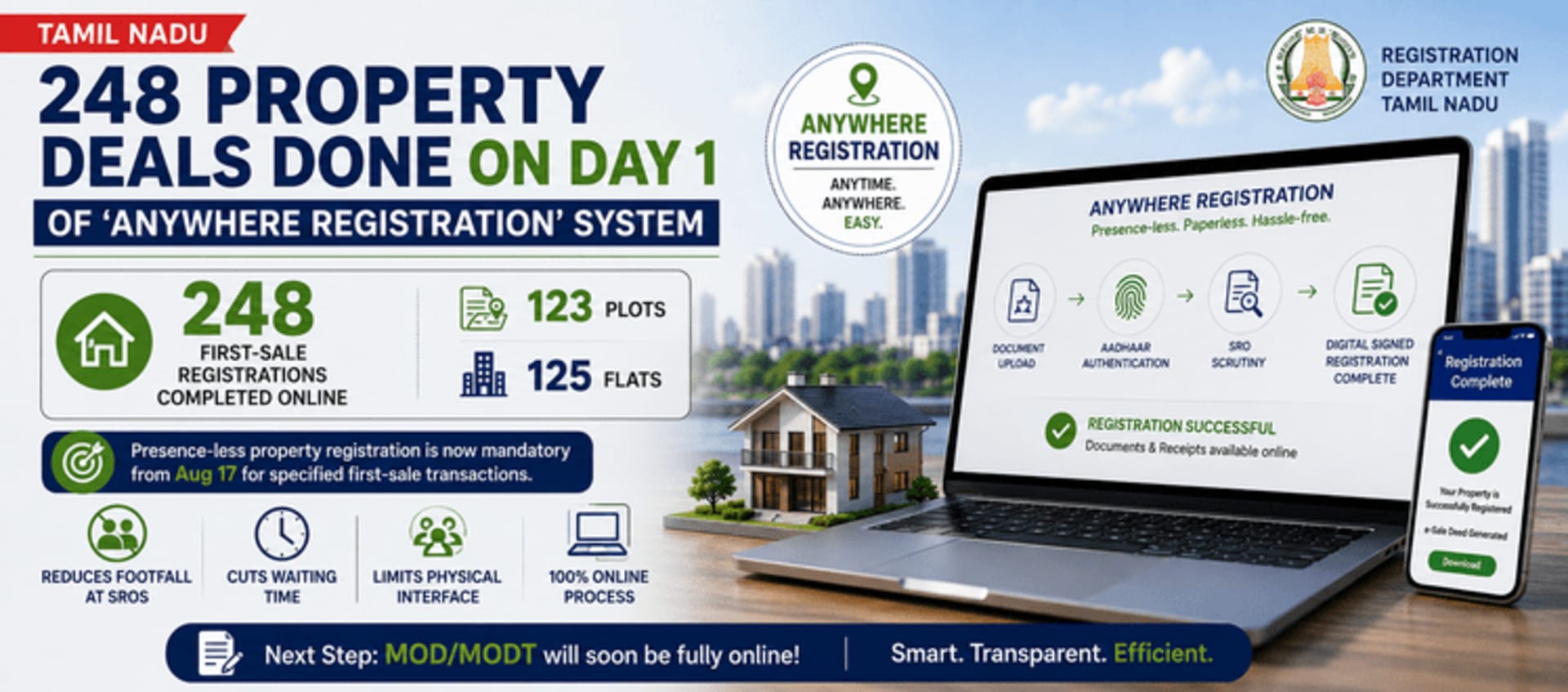
- Visit the TNREGINET portal (tnreginet.gov.in)
- Estimate guideline value for your property
- Pay via e-Challan (net banking / UPI)
- Book a sub-registrar office slot
- Complete registration with both parties present
Documents Required
- Sale agreement / draft sale deed
- Encumbrance certificate (EC)
- PAN cards of buyer and seller
- Aadhar cards
- Property tax receipt
- NOC from society (for apartments)
Propspedia Tip
Always verify the guideline value on TNREGINET before finalising your sale price — paying below guideline value means you still pay stamp duty on the higher guideline value.