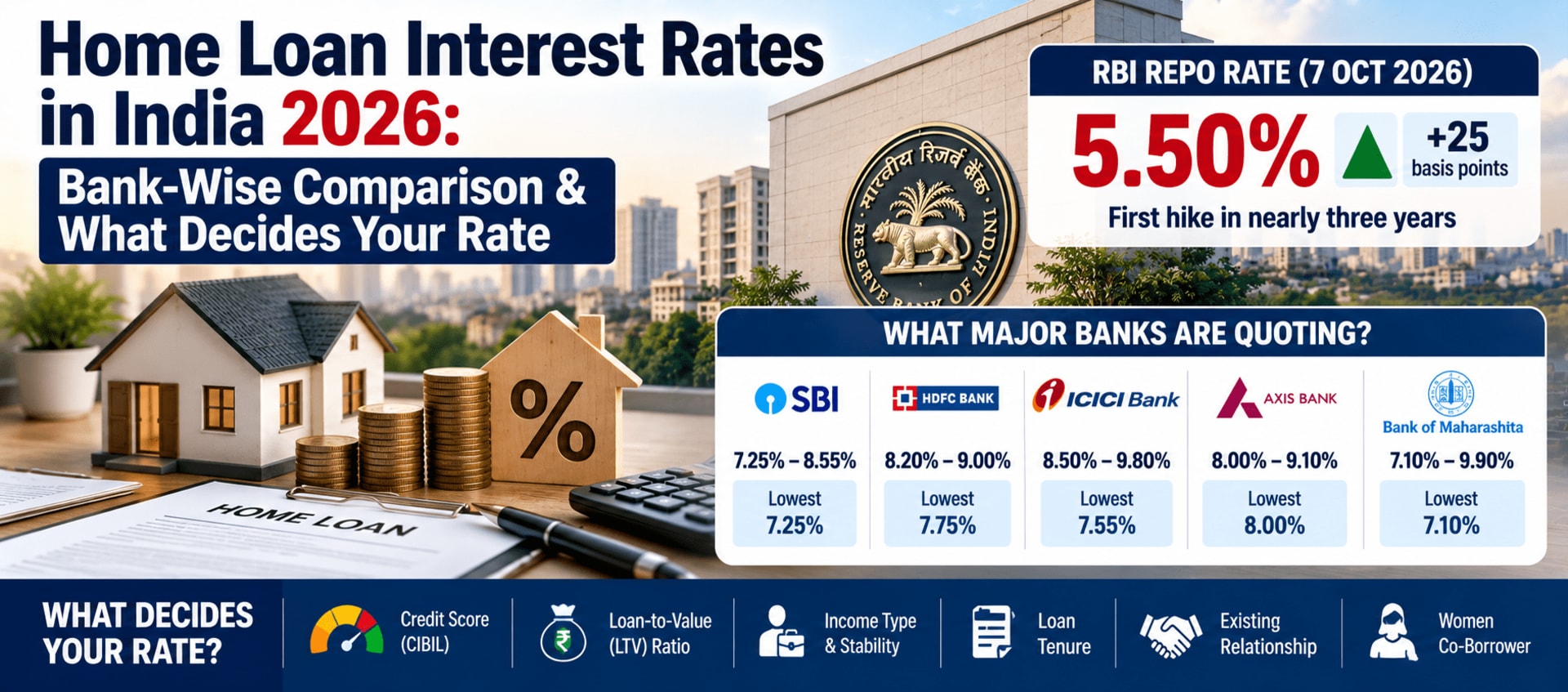
Before signing anything on a first home purchase in India, budget the true all-in cost — an ₹80 lakh apartment typically costs ₹88–93 lakh once GST (5% for under-construction), 4–5% stamp duty, 1% registration, and a maintenance deposit are added. A CIBIL score of 700+ is the minimum for loan approval (750+ gets the best rates), and RERA mandates that pricing be quoted on carpet area, not the larger super built-up area.
Quick answer: The 12 essential steps, in order: fix your true budget (all-in cost, not just base price), check your CIBIL score and get pre-approved for a loan, verify the builder's RERA registration and complaint history, pull the Encumbrance Certificate to confirm clear title, verify DTCP/CMDA and Fire NOC approvals, confirm the carpet area matches the RERA filing, negotiate (markets with 3+ years of unsold inventory favour buyers), read the builder-buyer agreement clause by clause for the possession-delay penalty, register that agreement at the Sub-Registrar's office, keep a paper trail of every document and payment, and complete a professional snagging inspection before the final payment. Skipping the RERA and title-verification steps is the single biggest cause of buyer disputes after possession.
Step 1: Get Your Finances in Order First
Before you even begin property hunting, know your budget with precision. Total cost = base price + GST (5% for under-construction) + stamp duty (4% in TN, 5% in Telangana) + registration (1%) + maintenance deposit (3–6 months' maintenance) + interiors.
For a ₹80 lakh apartment, your all-in cost is typically ₹88–₹93 lakh.
Step 2: Check Your CIBIL Score
Banks require a minimum CIBIL score of 700 for home loan approval; 750+ gets you the best rates. Check your score at cibil.com (free annual check). If your score is below 700, spend 6 months clearing outstanding debts before applying.
Step 3: Get Pre-Approved for a Home Loan
A pre-approval letter tells you exactly how much a bank will lend and strengthens your negotiating position with the builder. It's free and takes 3–5 working days.
Step 4: Verify the Builder's RERA Registration
In Tamil Nadu: tnrera.in | Telangana: rera.telangana.gov.in | Karnataka: rera.karnataka.gov.in
Check: registration validity date, project completion deadline, number of approved units, and whether the builder has any pending complaints.
Step 5: Inspect the Title Document
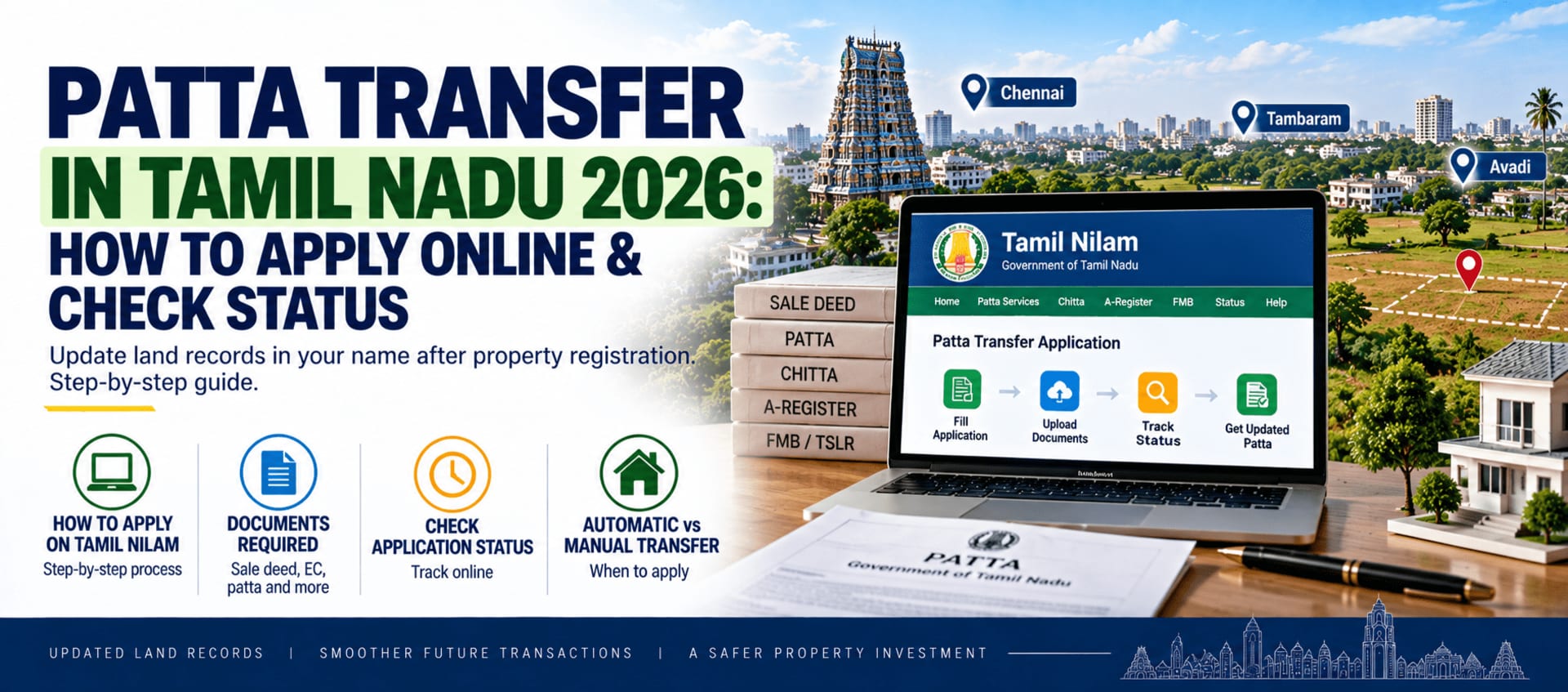
Never buy without a clear title. The Encumbrance Certificate (EC) from the Sub-Registrar shows all transactions on the property for up to 30 years. Any mortgage, legal dispute, or pending loan will appear here.
Step 6: Verify All Approvals
For apartments: DTCP/CMDA plan approval, Fire NOC, Environment Clearance (for projects > 20,000 sqm), and BESCOM/TNEB power sanction. Ask the builder for certified copies — not just photocopies.
Step 7: Understand the Carpet Area vs Super Built-Up Area Difference
RERA mandates pricing on carpet area. Verify the carpet area in the brochure matches the RERA registration. A 1,200 sqft apartment on paper may have only 850 sqft of actual usable space.
Step 8: Negotiate
In a market with 3+ years of unsold inventory, you have leverage. Ask for: price reduction (5–8%), free parking slot, free modular kitchen, deferred payment schedule, or waived maintenance deposit.
Step 9: Read the Builder-Buyer Agreement Word by Word
Pay attention to: possession date and penalty clause for delay, force majeure definition, maintenance charges and escalation cap, and exit/cancellation policy.
Step 10: Register the Agreement
Under RERA, the builder-buyer agreement must be registered at the Sub-Registrar's office. If a builder refuses to register it, that is a red flag — walk away.
Step 11: Maintain a Paper Trail
Keep copies of: booking form, payment receipts, builder-buyer agreement, home loan sanction letter, and all correspondence (prefer email over WhatsApp for critical matters).
Step 12: Plan for Possession
Before taking possession, conduct a snagging inspection with a professional — look for seepage, alignment of doors and windows, electrical fitting quality, and common area completion. Do not pay the final installment until all snags are resolved in writing.